Wednesday, 10 October 2018

Empress Charlotte 1. The Princess and the Archduke (Review)

Writer: Fabian Nury

Artist: Matthieu Bonhomme

Colourist: Isabelle Merlet

Publisher Europe Comics

Release Date: 17th October 2018


Historical fiction poses a unique problem. Writers who tackle this genre must balance the competing needs of telling the essential moments in a historical figure’s life and writing a story that reads as more than just a checklist of things that happened.

Fabien Nury’s script handles this issue in two ways. Firstly it is made clear in the pages before the book starts that this is a work of fiction, and the creators freely admit that “real incidents, conjecture, and pure invention are all freely interwoven here”. By adding embellishments to the plot the creators give themselves room to work with, and by doing it openly they avoid the usual criticisms of historical inaccuracy. Secondly, Nury’s script ties Charlotte’s character development into the development of the plot. The reader sees her go from being a scared, naive girl to a calculating, determined woman. Successive scenes are framed by what lessons they teach the young Charlotte, and the ways in which she reacts to those lessons. Framing separate events through the ways they change Charlotte stops Empress Charlotte 1. The Princess and the Archduke from feeling disjointed.  

Early on in the book, Charlotte meets the man who she will go on to marry. The two of them quickly develop a strong chemistry, and their conversations are pleasant. They mostly take place in ornate gardens and there is something of a period romance about them.

These interactions perfectly showcase who Charlotte is when the book starts, she is aware of the importance of matters of state, but she does not feel their presence in her life in the way she will as the story progresses.


Even the colouring of their first meeting is different. Isabelle Merlet covers the page in bright blues and pinks which imbue this portion of the book with a relaxed atmosphere that is not found in later pages.

In much the same way that growing up involves learning the realities of the world Charlotte finds out some harsh truths about what married life with the Archduke is actually like. The man who once seemed so charming and considerate gradually shows himself to be short tempered, prideful, and distant. The reality of Charlotte’s life as a whole is similarly disappointing.

This change is matched by Merlet’s colouring. The colours are rich, but the tone is dark, and there is a seediness to them that was not present in the happier parts of the book. Merlet’s work perfectly embodies the idea that Charlotte’s life only looks grand at first glance.

This duality between promise and reality is Matthieu Bonhomme’s art. Bonhomme is adept at utilising perspective to make the same character look sincere and thoughtful, or buffoonish and witless. Much of what a character is going through at any one moment is conveyed through Bonhomme’s work rather than being explicitly stated with words, with facial expressions telling the reader much about particular characters and setting the tone of each scene perfectly.

Anyone coming to Empress Charlotte 1. The Princess and the Archduke for the historical part of the historical fiction may be disappointed. Not knowing much about the era I could not say how faithful it is to the events as they are known.

However, what this book does have going for it is its interpersonal character dynamics, and its story of a young woman coming into her own in an arena where one wrong move could prove to be disastrous. Regardless of whether or not the history is true the fiction part of the equation is still compelling.

Empress Charlotte 1. The Princess and the Archduke is a strong start which a subsequent title in the series can build on. There is a clear arc for the central character, the art is strong, and the plot leaves at a point which serves equally well as an ending as it does as set up for a sequel. Despite the open presence of fictional events this is still a strong examination of what it is like for someone to live in a world where they hold great importance but still have little say over how things are run.


Thursday, 4 October 2018

Comics I bought - September 2018

I get most of my comics in a delivery at the beginning of each month so once a month I will write a post having a quick look at all the books released the previous month which I read. They weren’t be full on reviews, more quick thoughts and impressions.

With that being said here is what I bought in September


Ghostbusters: Crossing Over #6

This title continues to do what it does best, showing how the personalities of the various Ghosbusters iterations interact. In particular this issue is a strong one for Garrett, who gets his time to shine in a battle of wills with a ghost.

There is also the return of a character who will be a familiar face to anyone who has read the comic before but might confuse newcomers.

Heroes in Crisis #1


Heroes in Crisis has been the subject of controversy recently, and it is easy to see why. The title was marketed as exploring the traumas behind its characters, and how they take care of their mental health but it starts with their mental health facility in ruins and several characters dead.

While I found the mystery being built up intriguing, it does feel like it de rails the title from what was the stated intent behind book. I’m still going to give the second issue a shot though. The sections were characters were talking about their mental health were fantastic and I still think it is possible that this book could stick the landing.

Justice League Odyssey #1

As this comic is a spin off of Justice League: No Justice it would be easy to feel like required reading was necessary before approaching, a concern I myself shared. Luckily, this comic manages to put such fears to rest with its opening issue.

Cyborg, Starfire, and Azrael are busting into the Ghost sector which is currently being guarded by Power Ring. This first issue serves to set up the status quo for the series, and it works well as the opening entry in its story. The group dynamics are quickly established, there is enough mystery to entice readers to see what happens next (especially with that last page reveal), and there are only one or two plot details which might confuse new readers (such as the existence and nature of the Ghost Sector).

Doctor Who The Thirteenth Doctor Volume 0: The Many Lives of Doctor Who

Titan comics has been hyping up their upcoming Thirteenth Doctor series with their FCBD issue, and the Road to the Thirteenth Doctor. This book is their last in this regard before the Thirteenth Doctor arrives properly in comic book form on 17th October.

The comic is an anthology of sorts, with different writers and artists creating mini stories set across all of the Doctor’s current lives, with the regeneration of twelve into thirteen serving as a framing device to connect them all.

None of the stories are especially long, lasting only a few pages a piece, but they all manage to give a sense of what can be done with that character and show off the strengths of the respective artists behind them.

This book is a both a great celebration and a great sampler of Who. I think it will also work to show people who haven’t read Doctor Who comics before just what they’ve been missing.

Catwoman #3

The highlight of this issue is the backstory of the comic’s first villain. We see her recount the story of her first marriage to her second husband, and it is a perfect example of how the visual elements of comics are well suited for telling a story with an unreliable narrator. The difference between the story that Raina tells her husband and the scenes which are presented to the reader with the artwork speak volumes about Raina’s character without her ever having to say it out loud.

Vagrant Queen #4

This issue fills out more of Elida’ backstory, offering brief glimpses at both her reign and how she escaped the revolution. It also sets up a new antagonist for the series, and shows the role he played in Elida’s overthrow.

This was a strong issue for the series. It explored the issues surrounding the monarchy which led to its downfall and it offered some insight into why Elida doesn’t wish to reclaim her crow. In some ways it serves as a better first issue for Vagrant Queen than its actual first issue did.

Strangers in Paradise XXV #6

#6 is my favourite issue of this series so far. We haven’t seen much of Francine and the kids so far, and this issue shows what they are going through while Katchoo is off chasing down Stephanie. The scenes with Francine and her children are sweet, reminding readers of the emotional heart of this story, and just what it is that Katchoo is trying to protect.

Meanwhile Katchoo’s story is starting to heat up, she has found the magguffin of the series, and she finds herself in more danger than she was already in.

At times it doesn’t feel like individual issues of this series advance the plot very much, but this issue is just about everything a single issue of such a title could be. It advances the story, it ups the stakes, and it gives the characters room to remind the reader why they should be checking in every month.

....................................

So those were the books I read in September. There were no issues I outright disliked as such but I think the strongest titles this month were Vagrant Queen #4 and Strangers in Paradise XXV #6

Thursday, 27 September 2018

Aquicorn Cove (Review)


Writer & Illustrator: Katie O'Neill

Letterer: Crank!

Editor: Arl Yarwood

Publisher: Oni Press, Inc

Release Date: 16th October 2018

Aquicorn Cove is the story of Lana, a young girl who visits her aunt with her father in the wake of a storm which has devastated her aunt’s village. While there she befriends an unusual sea creature and learns more about her aunt’s past, all while learning to cope with the loss of her mother. .This is an environmentalist fable, a slice of life story, and a come of age tale.

It would be hard to review Aquicorn Cove without mentioning famed Dr. Seuss book, The Lorax. Much like The Lorax, Aquicorn Cove asks its central characters to examine the impact their actions have on the environment, and like The Lorax this is achieved with the aid of a magical creature who asks the human character to see the error of their ways.


Where this book stands out however, is in its emotional core. Far from being the greedy cliches of other environmentalist works, the human characters in this book have a clear, sympathetic reason for why they are doing what they are doing, despite the damage it is doing to the world on which they depend. This isn’t a tale of unchecked avarice, but of people simply trying to do the best they can to survive in a changing world. It isn’t a loss of profits they fear, but the loss of their homes, and their way of life. There are no villains here, and the book is all the richer for it. The sympathetic nature of the human cast allows the readers to root for these characters and hope they can find a way forward, even if it means that something has to change.

The environmentalist message at the heart of of Aquicorn Cove is backed up by a story line very personal to the character of Lana. Although an exact time frame is never given for when Lana lost her mother, it is clear that her loss still affects both Lana and her father very deeply. Lana is at a point where she is starting to find her place in the world, and she is becoming more and more aware of just what the loss of her mother means as she grows. This is a loss the character feels more keenly now that she is back at her mother’s home, and spending time with her aunt Mae, who in many ways takes on the role of mother figure.

Without going into specifics, the seemingly separate story strands of the concerns of the village, and Lana’s personal feelings of loss do come together in a way that is not only satisfying from a storytelling point of view, but also deeply touching. The culmination of the journey of the village as a whole is also the culmination of Lana’s journey, and the lessons that have been learned by the characters over the course of the book are perfectly encapsulated in how the lessons the village learns and the lessons Lana learns converge.

Katie O’Neill’s beautiful writing is matched perfectly by her illustrations. Aquicorn Cove features soft colouring which works perfectly with the expressiveness of the line art to capture the mood of every see, be it the wonder of the sea, Lana’s moments of joy or sadness, or the terror of the storms that befall the village. There are no sharp lines and the book feels all the richer for it.

Aquicorn Cove is a beautiful book. Not only is it visually stunning, but O’Neill deftly combines ideas of  personal and communal tragedy into a story about accepting the past and learning to let go so that you can move on into the future. O’Neill seamlessly integrates these different elements into a book which highlights the consequences of our actions, not with judgement, but with love.

Wednesday, 27 July 2016

The Killing Joke; what matters is the punchline


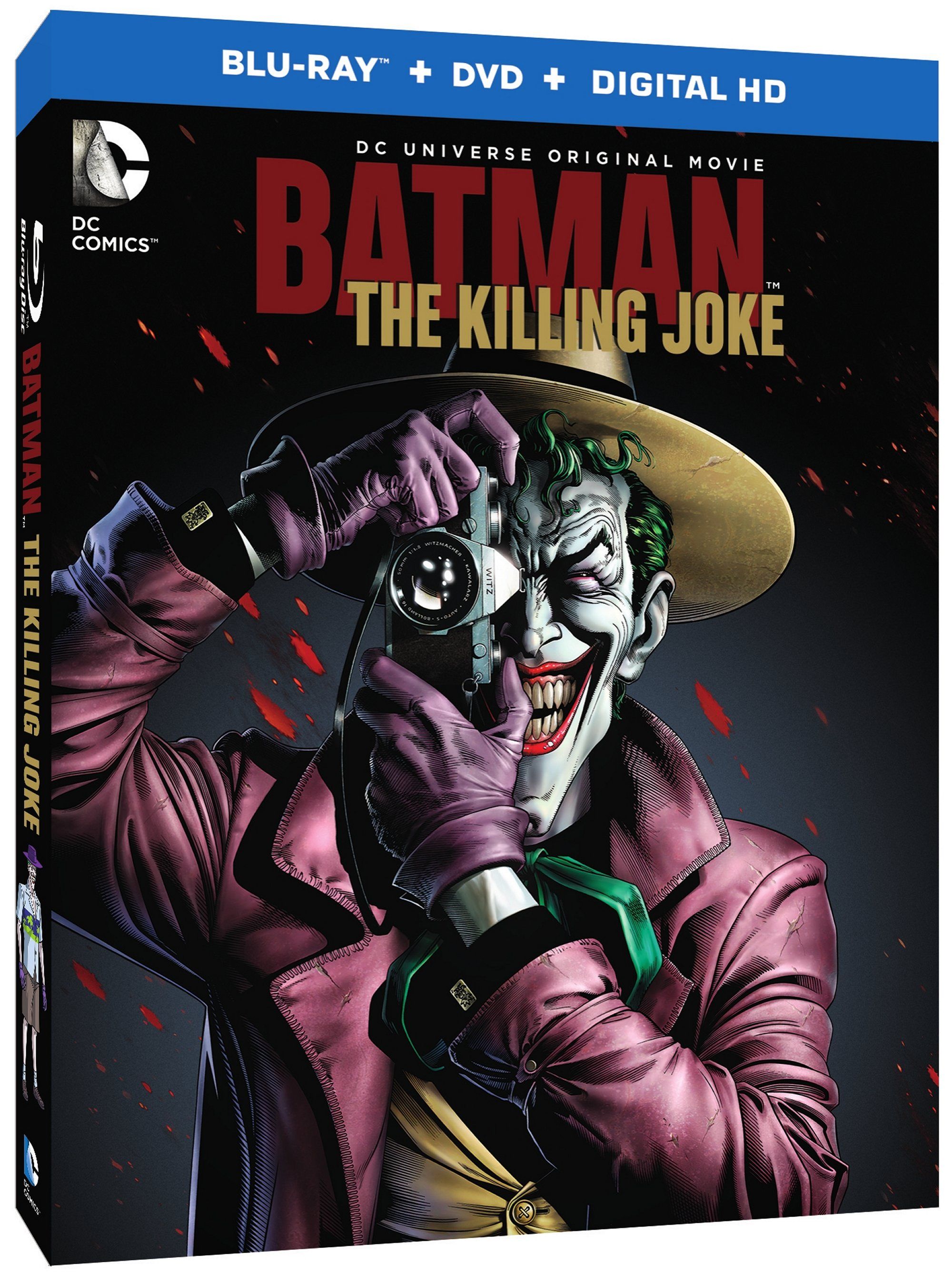
Next month will see the release of the animated adaptation of Alan Moore's milestone graphic novel "The Killing Joke". In order to flesh out the story, and provide the movie with more length than the story would otherwise provide DC are adding a whole new section into the story before the events of the comic. I think that this is a good thing. There are elements of the story that need to be worked on. However I do think that by focusing on the beginning of the story the writer and animators are putting their attention in the wrong place. If you are looking at the Killing Joke with a view to improving it the beginning isn't what matters, what matters is how it ends.

This is because the chief problem with the Killing Joke isn't that Barbara Gordon is attacked and paralysed. The chief problem is that she is attacked, paralysed and then promptly ignored by the story. We see little of how Barbara feels about what has happened to her and the attack is purely motivated as a way to affect male characters (in this case James Gordon and Batman). This is something that is very important to remember when discussing this type of story (dubbed women in refrigerators by Gail Simone). The attack on Barbara kick starts the events of the Killing Joke but this story is not about Barbara. The story is about Batman and the Joker, Barbara is used as little more than collateral damage by the story.

 But how does this tie in with how someone would go about adapting the Killing Joke? Simple. If you want to flesh out the Killing Joke you need to transform it from a story in which Barbara is paralysed into a story about Barbara being paralysed.

You might be wondering how I would suggest that could be done. Firstly more attention needs to be put on how Barbara reacts to the news that she will no longer be able to walk. A proper scene in which the character was given the news and began to process it would go a long way towards making Barbara more involved in what should be her story, and it would provide a quieter scene in between the assault and Batman's visit to the amusement park.

The second thing that the adaptation would need is to have Barbara involved in taking down the Joker in some capacity. Now I will admit that this could be tricky to pull off. The whole point of anything the Joker does is that he wants Batman to know that he did it. In the Killing Joke he also wants Batman to know exactly where to find him. Batman doesn't discover the Joke in the Killing Joke, he is invited. The writers would also have to consider the fact that Barbara would be physically and emotionally devastated by the attack and also be undergoing pretty heavy duty medical care.

The way to get around this would be to have the confrontation between the Batman and the Joker take place as the middle of the story rather than the end and to expand the scale of the Joker's plan. Doing so would enable Barbara to recover somewhat to the point from which she could affect the story and expanding the Joker's plan would give her something to thwart without changing the original intent behind the story.

In the Killing Joke the Joker sets out to prove that anyone can be driven mad by one bad day and plans to use James Gordon as an example. One route that the adaptation could go down would be to have Jim Gordon be the first example rather than the only example. The movie could depict this as something that the Joker intended all along or as a plan B for him to fall back on.Either way it would be resolved by Barbara figuring out that there was more to the Joker's plan and using the skills that she would go on to employ as Oracle and to point Batman in the right direction.

Finally we need to see what will come next for Barbara. When Barbara Gordon was originally payalysed in the Killing Joke there was no plan for the character. If it hadn't been for the efforts of writers Kim Yale and Jim Ostrander the character would have been discarded. Since the Killing Joke many stories have dived into how the experience shaped Barbara and how she grew into the role of Oracle. The best way for the adaptation to end would not be with Batman and the Joker laughing on the roof (as great as that ending is) but with Barbara vowing to apply herself in a new direction rather than give up on the fight against evil. If they did that then it would truly become her story.

Saturday, 20 February 2016

One issue stories: Green Lantern #48


One of the biggest annoyances comic book fans can face is when a story is stretched out across many issues. This can leave readers frustrated by having to wait another month for the conclusion to a cliffhanger, having to buy so many issues to finish a story, or by pacing issues that can arise if a story is stretched out to last too long.

The one issue stories segment of this blog aim to look at stories that are neatly wrapped into one issue, so that anyone reading this blog can see where they can find a good story without having to buy too many comics.

Naturally I chose to start this segment with a comic that serves as the opening chapter in a three issue story, wait what?

Now I know I am probably losing but please allow me to explain before you comment or stop reading. Yes Green Lantern #48 is only part one of the three part "Emerald Twilight" story, but in my opinion #48 is not only much better than either #49 or #50 it actually works as its own story. In my opinion you can still enjoy a more or less complete story if you only read #50 (plus you get to avoid seeing Hal Jordan turn evil).

See? There is method to my seemingly complete lack of regard for my own segment topics.

Firstly I will start with some background.

As many people know Superman was killed off and brought back to life in the 92. What less people know however is that during the story arc that dealt with this series of events the hometown of Hal Jordan (Green Lantern) was destroyed by two of Superman's villains.

Green Lantern 48# picks up in the wake of this destruction. We open the comic to find Hal Jordan kneeling in the crater of what was once his home. Since Hal's ring gives him the power to create anything that he imagines he uses it in an attempt to restore his city and all of its former inhabitants. The majority of the issue focuses on Hal Jordan exploring the projection of the city that he has created and interacting with ghost like projections of people from his past.


There isn't any action in this issue, rather the issue is used to explore the thoughts and feelings of its central protagonist. I know that action is one of the main draws of superhero comics but sometimes it is nice to read a comic that serves as a breather between issues. Hal's feelings are made all the more relevant by the fact that his ring is powered and directed by his emotion (namely his willpower). It is in my opinion, an excellent study in the nature of grief and revisiting the past. In trying to bring back the home that he lost Hal is attempting something that we wish have wished we could do at one point or another. Hal finally says what he always wanted to say to his first love, he gets to have one more talk with his late father and get some answers on what his father would have thought of the man that Hal became.

In my opinion this issue could have been the foundation of a truly great story, and everything that is wrong Emerald Twilight is down to the two issues that follow.

Now it is true that Hal spends the last part of the issue already intending his infamous assault on the Green Lantern Corp, but I believe this would have been fine if #49 had gone a different way. When his ring runs out of juice Hal is brought painfully back into reality. He is immediately desperate to return to the world that he has created and he sees the Guardians as getting in the way of that. I believe that it is only fitting for the story that he would be a bit hostile at this point because he is essentially a wounded animal, trapped in his own pain. Had the following issues had him lose to the corps and be forced to come to terms with his loss the story would have been all the better for it.


Green Lantern #48 uses the abilities of its titular hero to explore upon feelings that will affect us all at some point or another throughout our lives. Hal struggles with his loss and tries in his own way to reconnect with the past. While his actions in the issues are not heroic they are certainly sympathetic.

All of this explains why Green Lantern #48 is good, but not quite why it deserves to be thought of as a single issue story. In order for that to be true it would have to have a beginning, a middle, and an end all in that issue and tell a complete story. So if we were to remove #49 and #50 what are we left with?

We have a story that starts with Hal's loss and his reaction to that loss. We move on to his attempts to process his grief and the story concludes when the he is interrupted by the outside world and finds that he is unable to cope. It isn't a happy ending but I maintain that that it has all the basic ingredients for a complete story. Admittedly it ends on a cliffhanger but I do not believe that fact is enough to disqualify it own its own.

Green Lantern #48 not only does justice to the universal themes that it explores, it does so in only one issue. That is why it is the first comic that I am recommending as a one shot story.


Friday, 1 January 2016

Why it's ok that Ben Parker, and the Waynes are perfect


One thing that long time comic book readers have probably noticed is how often the parents of superheroes are depicted as being perfect. This isn't always the case but often when a comic does focus on a superhero's parent(s) their flaws are ignored or not portrayed to the extent that you would be forgiven for thinking that they lacked any. 

You might think that I should be writing why this is a problem. Generally speaking characters who exist to be perfect are less interesting than their flawed counterparts. It is through a character's flaws that we see their struggles and their journey as characters. Character flaws also allow us to better relate to a character as we can see our flaws in them. 

So why am I in favour of a certain group of characters being without flaws? To answer that question I need to examine the roll that these characters play in the stories in which they appear. 

First I will look at the example of deceased 

I'm not saying that deceased characters should be perfect, in Harry Potter we only really start to see Dumbledore's flaws after his death and the reveals give us a greater appreciation of his character. The fact that these characters die as part of a backstory is key to my argument. 

Because the parents of superheroes often die in their offspring's backstory what we see of them is almost always through flashbacks or expanded backstory. This means that from a certain point on wards we are only experiencing these characters through the interpretation of their children. 

Take Thomas Wayne and Martha Wayne for example. Bruce Wayne's age is depicted as being anywhere from eight to twelve/thirteen when Thomas and Martha Wayne are killed in front of him. Because of this Bruce sees them the way he did when he was a child. Not only that but because he was only a child when it happened he would be getting a lot of his information on the type of people his parents were from stories about their actions or people who knew them personally. In the case of the former they will be stories deigned with certain angles in mind, and therefore not likely to give a fair and balanced fair of who the Waynes were. In the case of the latter he is unlikely to hear the negative aspects because the teller (say Alfred for argument's sake) aren't going to want to dwell on mistakes that the Waynes may have made because they were very dear to them, and they miss them. 

This aspect also explains why figures like Ben Parker are portrayed as perfect even though Parker is older than Bruce was when they wen't through their similar losses. In Parker's case he is going to want to focus on the positives of his uncle because that is naturally would he would focus on, and not just because of his feelings of guilt over the circumstances of his uncle's death. 

 "Everyday the future grows a little bit darker, but the past even the grimy bits, just keeps getting brighter" ~ Sally Jupiter, Watchmen
But what about living parental figures? The best character to use as an example for this is May Parker. In an event with Kevin Smith, Stan Lee said that he came up with the character of May to give Spider-Man someone to worry about. As readers we see May through the eyes of Spider-Man and this view is tinted by his worry and concern for her. This view of May is as complete as Bruce Wayne's view of his parents and isn't a full picture of who she is.

Spider-Man often worries about what would happen if May were to find out both the full circumstances of her late husband's death and his identity as Spider-Man. Yet in one comic she finds out both of those things and she is able to deal with them. Because she is much stronger than Spider-Man's fears allow him to give her credit for. This highlights the imperfect nature of the lens through which we perceive her character.

In Superhero comics parents and parental figures are often depicted as perfect. This is not however because their writers are lazy, or because the characters themselves are two dimensional. They are seen this way because we are witnessing these characters through the minds of their loved ones. In this capacity they serve as reflections of the hero's mental state. They show us what example the hero is trying to live up to, and also what they have lost or still fear to lose.


Sunday, 6 December 2015

Post mortem: Thomas Wayne of Earth 2 (New 52)


This article contains content that could be considered spoilers for  Earth 2 #1, Earth 2 Annual #2 and Convergence #3

One thing that we do not suffer a lack of in superhero comics is character deaths. It would be an exaggeration to say this is on the same level as, say Game of Thrones but they happen enough that a superhero dying has become a recognisable trend of comic books, especially in a big event.

The goal of a post mortem article is to look at character deaths in comic books and examine whether or not they were any good. It should be stated that I will not be looking at the merit of the stories that the deaths occur in, merely the deaths themselves. In my opinion there is no better way to illustrate that distinction than by looking at the death of Earth 2's (New 52) second Batman, Thomas Wayne.

The Thomas Wayne of Earth 2 was killed off in the third issue of recent mini series, Convergence. He dies fighting against various Batman villains from the pre-Flashpoint DC universe. He puts up a fight but is quickly overcome and sets off an explosion, killing the villains but also himself. In my opinion it is a fitting end for the character, one that brings his story threads to a natural end rather than disrupt them.

So why do I think this? The answer can be found in Thomas' back story.

Thomas' back story, as well as his motivation are explained in Earth 2 annual #2. In that issue the reader is shown that Thomas is a character defined by regret. Martha was murdered in front of Thomas and Bruce because of Thomas' connections to, and involvement with Gotham's organised crime (specifically the drugs trade). Batman chose a life as Batman, in part because Thomas faked his own death and Bruce did not find out that he survived the shooting until much later. Because of his decision to stay away from his son and pursue revenge his son disowned him when they were eventually reunited. To put it simply, every major decision Thomas Wayne made in his life only served to hurt, and fragment his family. He attended his son's wedding in secret and could only see Bruce and his family from afar. He was unable to make amends before Bruce's death in Earth 2#1. It is because of his regret that Thomas takes on the mantle of Batman. As a character he is defined by this regret. The character is so consumed by this desire to make amends that he uses Miracolo, effectively a superhuman steroid. The character has a history of drug addiction and is aware that Miracolo is a new addiction but claims he wouldn't be able to be Batman without it. Just like Bruce Wayne's Batman is consumed by his desire for vengeance, often at the cost of his own health, Thomas Wayne is consumed by a desire for redemption.

By the time of his death in Convergence 3# all of this issues have been resolved to one degree or another. Thomas Wayne's death in Convergence serves as a swan song to the character. Without any Miracolo to rely on he his forced to face overwhelming odds on his own strength and dies taking down a sizable chunk of Batman's pre Flashpoint rogues gallery with him. In this fight he is no longer a man seeking to wash away his mistakes as a husband and a father, but a man heroically defending his family.

Thomas Wayne's death also ties into the themes of the story in which it takes place. Convergence takes place in between the destruction of the old (New 52) Earth 2 and the establishment of the new Earth 2 that is the focus of Earth 2: Society. In this series Thomas serves as a brief mentor to Earth 2' Dick Grayson, who is inspired to take up the mantle of Batman after Thomas' death (Batmen drop like flies on Earth 2). Just as Convergence serves to bridge the gap between the original Earth 2 comic book series and Earth 2: Society, Thomas serves to bridge the gap between the original Earth 2 Batman and the new one. His death can be seen within a wider context of the last hurrah of the old series before the coming of the new series.

In my opinion killing off Thomas Wayne was not just a good way to end his story it was the most appropriate way to end his story. Both for the character, and the story. Unlike many character deaths which have been used for pure shock value or to raise the profile of a series Thomas' death genuinely serves the series in which it takes place.

Rather than close with a concluding argument I think I will let Dick Grayon's words from the comic itself explain why I believe the death to be such a fitting end for the character.